
Budget Unpacked
Every year, the Village of Harrison Hot Springs prepares a budget to fund municipal services, maintain infrastructure and respond to community needs.
The budget connects the services we rely on today with the infrastructure and financial decisions that shape our community's future.
Explore the information below to learn how municipal budgeting works, where funding comes from, how property taxes fit into the picture and how budget decisions are made.
Understanding the municipal budget
What is a municipal budget?
A municipal budget is a financial plan that outlines how the Village expects to receive and spend money. It helps determine how available funding will support municipal services, infrastructure, programs and other community needs.
Preparing a budget involves balancing the costs of delivering services today with the need to maintain infrastructure and plan for the future.
The budget also helps Council and staff assess competing priorities, consider available funding and make decisions about how municipal resources will be used.
The five-year financial plan
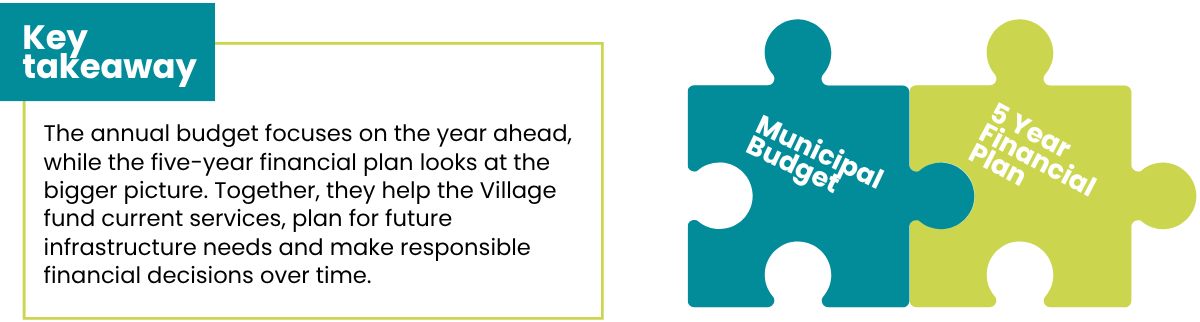
Municipal planning extends beyond a single year. The Village prepares a five-year financial plan to look at anticipated revenues, expenses, projects and funding needs over time.
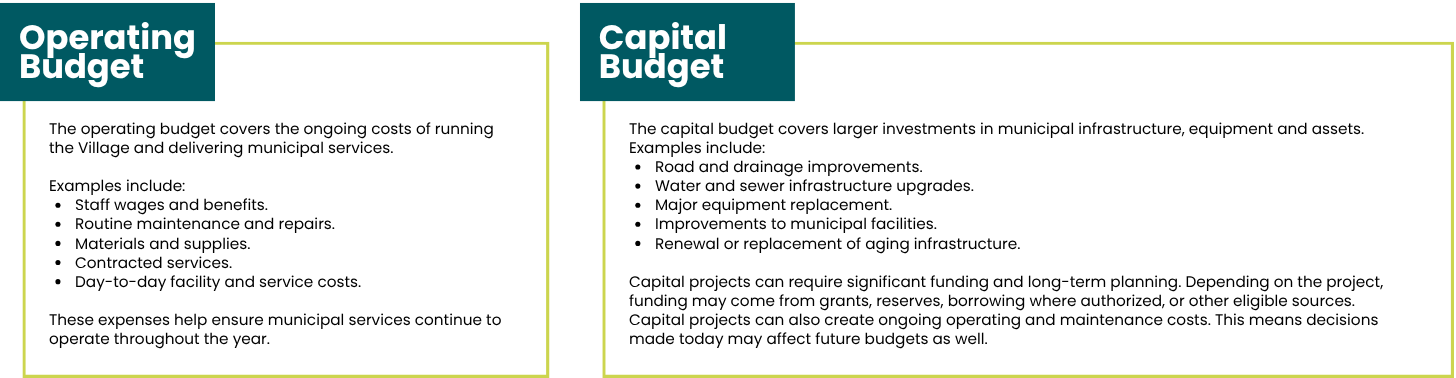
For example, maintaining a road may be an ongoing operating expense, while replacing a water main or upgrading drainage infrastructure may require a larger capital investment.
Planning ahead helps the Village anticipate these costs, consider funding options and understand how today's decisions may affect future budgets.
The five-year financial plan is reviewed and updated as needs, costs and circumstances change. While it provides a longer-term outlook, projects and priorities may change as new information becomes available.
Where the Village's money comes from
Property taxes are an important source of municipal revenue, but they are not the only source. The Village receives revenue from several sources, which may include:
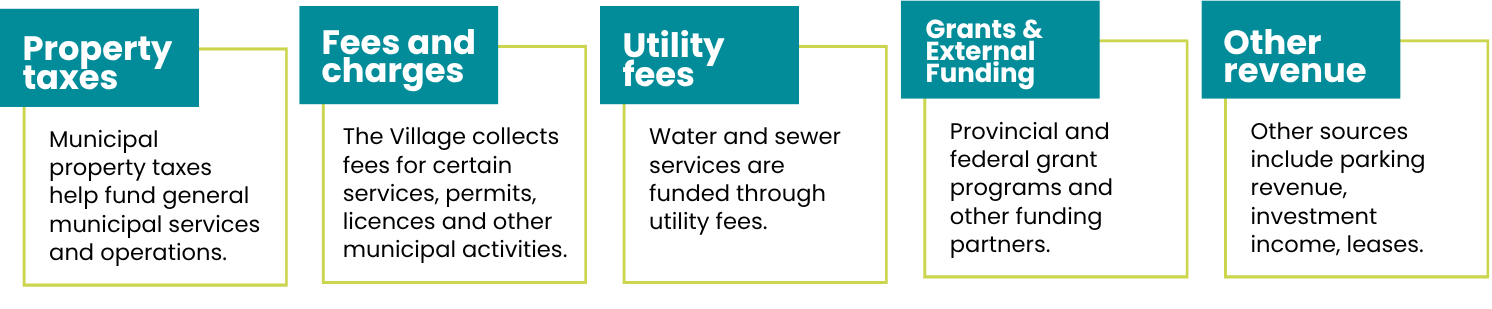
Different revenue sources may have restrictions on how they can be used. For example, funding received for a specific infrastructure project may not be available to pay for unrelated operating expenses.
Understanding these funding sources helps explain how the Village determines what it can afford and how different services and projects are funded.
How the budget connects to property taxes
The budget and property taxes are closely connected.
The budget estimates how much money the Village needs to deliver services, maintain infrastructure and meet its financial commitments. The Village then accounts for revenue from other sources to determine how much needs to be raised through municipal property taxation.
This amount is called the municipal property tax levy.
The process can be summarized in four steps:
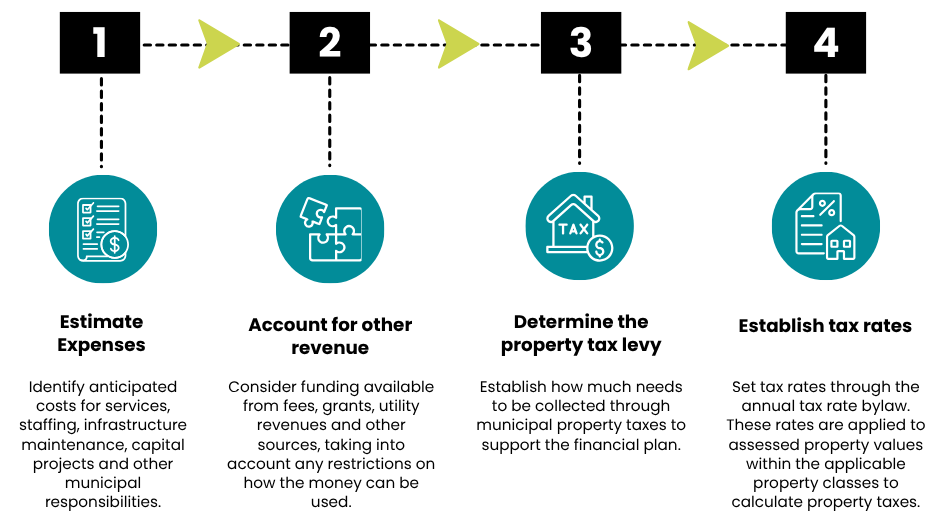
The municipal property tax levy is the total amount the Village needs to collect through municipal property taxes. Individual property tax bills depend on the applicable tax rates and assessed values.
A change in the municipal tax levy does not necessarily mean every property owner's tax bill will change by the same percentage.
Operating and capital budgets
The Village's financial planning considers both the ongoing costs of delivering services and the larger investments needed to maintain and renew municipal assets.
Planning for infrastructure and the future
Municipal infrastructure requires ongoing maintenance, repair and eventual replacement. Roads, drainage systems, water and sewer infrastructure, buildings and equipment all have different life cycles and funding needs.
The Village considers infrastructure condition, service requirements, project costs, available funding and timing when planning capital investments.
Long-term financial planning helps the Village:
Identify infrastructure that needs repair or replacement.
Plan for major projects over several years.
Consider grants and other funding opportunities.
Determine how much funding may need to be set aside for future costs.
Balance immediate needs with long-term financial sustainability.
Not every project can proceed in the same year. Projects may be phased, deferred or adjusted depending on available funding, priorities, construction costs and other considerations.
How budget decisions are made
Preparing the budget is a collaborative process involving the community, Village staff and Council.
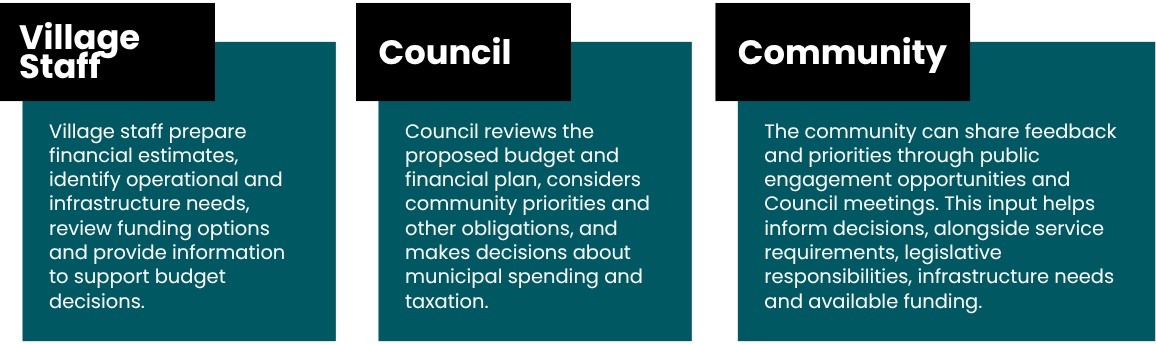
Not every request can be funded in a given year. The budget process helps the Village consider competing priorities and make decisions within its financial capacity.
Have your say on Budget 2027
Understanding how the budget works can help you provide informed feedback about the services, infrastructure and priorities that matter to you.
As the Village prepares its 2027 budget, community input is an opportunity to share perspectives and help inform decisions about the future of Harrison Hot Springs.
Visit the Budget 2027 engagement page to learn about current engagement opportunities, review project information and share your priorities.
Explore Budget 2027 and have your say!
More information
For more information about municipal finances and property taxes, explore the following resources:
Village of Harrison Hot Springs: Municipal financial plans, budgets, annual reports and tax information.
BC Assessment: Information about property assessments and how assessed values are determined.
Province of British Columbia: Information about property taxation and other taxes and levies that may appear on a property tax notice.
The Village's financial plans and tax information provide the official details about approved budgets, municipal revenue, expenditures and taxation.